
I used to think all backpacks were basically the same—just a bag with straps, right? Then I spent eight miserable hours on a trail with a poorly designed pack that dug into my shoulders, threw off my balance, and left me with back pain for three days. That uncomfortable experience sent me on a quest to understand what actually makes a great hiking backpack.
Over the past five years, I’ve tested more than 30 day hiking packs on hundreds of miles of trails—from easy nature walks to challenging mountain ascents. I’ve carried everything from ultralight minimalist packs to feature-loaded technical bags, and I’ve learned that the right backpack is just as important as the right hiking boots for enjoying your time on the trail.
This guide focuses on five exceptional day hiking backpacks that represent the best options across different hiking styles and budgets. Whether you’re a casual nature walker or a peak-bagging enthusiast, one of these packs will transform how you experience the outdoors.
What Actually Matters in a Day Hiking Pack
Before we dive into specific recommendations, let’s talk about what separates a great hiking backpack from a mediocre one that leaves you sore and frustrated.
Capacity: Finding Your Sweet Spot
Day hiking packs typically range from 15 to 35 liters. Here’s what those numbers actually mean in practice:
15-20 liters: Minimalist packs for short hikes (2-4 hours) with just essentials—water, snacks, first aid, and a light jacket. Perfect for well-maintained trails close to civilization.
20-28 liters: The sweet spot for most day hikers. Enough room for the 10 Essentials, extra layers, lunch, and some camera gear. Handles 4-8 hour hikes comfortably.
28-35 liters: Maximum day pack capacity for long hikes, variable weather, or when you need to carry group gear. Also works for overnight trips in huts or when ultralight backpacking.
Most people are happiest with something in the 20-28 liter range. It’s the Goldilocks zone—enough space to be prepared without encouraging overpacking.
Fit and Suspension: The Make-or-Break Factor
A pack that doesn’t fit properly is torture, regardless of how many features it has. Here’s what matters:
Torso Length: This is more important than your height. A pack sized correctly for your torso length distributes weight properly and prevents shoulder and back pain.
Hip Belt: Should sit on your hip bones (not your waist), transferring most of the weight from your shoulders. Even for day packs, a good hip belt makes a huge difference on longer hikes.
Load Lifters: Those angled straps at the top of the shoulder straps aren’t decorative—they pull the pack’s weight closer to your back, improving balance and reducing strain.
Ventilation: Because Sweat Happens
Hiking is sweaty. A pack that traps heat against your back is miserable. Good ventilation systems create airflow between the pack and your back, keeping you cooler and more comfortable.
Organization and Access
Multiple compartments help you find things quickly without unpacking your entire bag on the trail. Side pockets for water bottles are non-negotiable. A dedicated hydration sleeve is incredibly convenient if you use a reservoir.
Now let’s look at the packs that get these details right.
Our Top 5 Day Hiking Backpack Recommendations
1. Osprey Talon 22

- Internal padded laptop sleeve
- Dual zippered hipbelt pockets
- Blinkie light attachment
Best Overall for Serious Day Hiking
The Osprey Talon 22 is the pack I reach for on 90% of my day hikes. After three years and probably 200+ miles of trail use, it’s proven itself as the most versatile, comfortable, and well-designed day pack I’ve tested.
Capacity and Organization:
The 22-liter capacity hits the sweet spot perfectly. I can fit everything I need for a full-day hike—3 liters of water, lunch, first aid kit, rain jacket, insulation layer, navigation tools, and even a compact camera with an extra lens.
The main compartment is simple and spacious with a floating divider that lets you separate wet/dirty items from clean gear. There’s a zippered internal pocket for valuables like your phone and wallet. The lid pocket is perfect for snacks, sunscreen, and other items you want quick access to without opening the main compartment.
The Suspension System:
This is where the Talon 22 really shines. Osprey’s AirScape back panel creates ventilation channels that actually work—my back doesn’t turn into a swamp even on hot summer hikes. The foam is firm enough to transfer weight but comfortable enough for all-day wear.
The hip belt has genuine padding and useful zippered pockets (perfect for phone, trail snacks, or chapstick). Unlike cheap packs with decorative hip belts, this one actually transfers weight to your hips, taking strain off your shoulders.
The shoulder straps are well-padded and shaped to avoid pressure points. The load lifters and sternum strap (with an integrated emergency whistle—nice touch) fine-tune the fit perfectly.
Hydration and Water Access:
The pack accommodates a 3-liter hydration reservoir with an internal sleeve and hose port. I typically use water bottles instead, and the stretchy side pockets securely hold Nalgene bottles while allowing easy access without removing the pack.
There’s also a front mesh pocket that’s perfect for a rain jacket or windbreaker—items you want to grab quickly when weather changes.
Real-World Performance:
I’ve used this pack on everything from easy nature trails to challenging 14er climbs. It’s handled rocky scrambles where I needed mobility, long forest hikes where comfort mattered, and exposed ridge walks where streamlined design prevented wind catching.
The pack carries loads up to about 20 pounds comfortably. Beyond that, it’s not designed for heavy hauling, but for typical day hiking, the capacity and support are perfect.
Durability Check:
After three years of regular use, my Talon shows minimal wear. The fabric (210D nylon) has held up to scraping against rocks, getting stuffed into the trunk repeatedly, and general outdoor abuse. The zippers are still smooth, the stitching is intact, and the buckles show no signs of failure.
The only wear I’ve noticed is some light fuzzing on the hip belt padding, which is purely cosmetic.
Features I Actually Use:
- Trekking pole attachments (work perfectly and don’t rattle)
- Bungee compression on the front (great for securing a jacket)
- Dual ice tool loops (I don’t ice climb, but they hold various gear)
- Integrated raincover in a bottom pocket (used it twice, glad it’s there)
Minor Considerations:
At $120-140, this isn’t a budget pack. It’s also not the lightest option (2 pounds), though the weight is justified by the comfort and features. The pack comes in multiple sizes—make sure you measure your torso length and get the right fit.
Who Should Buy This:
- Serious day hikers who hit the trails regularly
- Anyone doing 6+ hour hikes with variable weather
- Hikers who value comfort and proper fit
- People who want one versatile pack for most day hikes
- Anyone willing to invest in quality that lasts
Product to Search: Osprey Talon 22 Hiking Backpack
Price Range: $120-140
2. Deuter Speed Lite 20

- DESIGNED FOR COMFORT: The Lightweight Speed Lite 21L daypack with V-shape design for a full range of movement and optimu…
- FEATURES: Detachable waist belt, sturdy zipper pulls for easy handling with gloves and large stretch compartment inside….
- STORAGE: Zippered valuables pockets on top with key clip, two stretch side pockets, stretch mesh pocket on the front for…
Best Lightweight Option for Fast-and-Light Hiking
If you’re the type of hiker who moves quickly on the trail and doesn’t like carrying unnecessary weight, the Deuter Speed Lite 20 is engineered specifically for you. At just 15 ounces, it’s remarkably light without sacrificing essential features.
The Minimalist Philosophy:
Deuter designed this pack by stripping away everything non-essential while keeping the features that actually matter. The result is a pack that weighs less than a Nalgene bottle but still provides genuine comfort and organization.
The 20-liter capacity is adequate for day hikes when you pack efficiently. I can fit water, lunch, a light insulation layer, rain shell, first aid kit, and navigation gear without struggle. You won’t have extra space, but that’s the point—it encourages smart packing.
Weight Distribution:
Despite minimal padding, the Speed Lite is surprisingly comfortable. Deuter’s Aircomfort Flexlite system creates standoff from your back using a spring steel frame and breathable mesh. It’s not as plush as heavily padded systems, but the ventilation is exceptional.
The hip belt is minimal—really just a stability strap rather than a load-transfer belt. This is fine for the pack’s intended use (light, fast hiking), but if you’re planning to carry 15+ pounds, consider something with more substantial hip support.
Organization and Access:
The main compartment is a simple top-loader with a floating lid. There’s one internal zippered pocket and that’s it—no excessive compartmentalization. The simplicity is actually refreshing; you’re not fiddling with multiple zippers and pockets.
Two stretchy side pockets hold water bottles securely. The front has a large stretchy mesh pocket perfect for a rain jacket or windbreaker. There are daisy chains on the front for attaching extra gear.
Real-World Testing:
I’ve used this pack primarily for trail running and fast-paced day hikes where I want minimal weight. It’s perfect for summer hikes on well-maintained trails where I don’t need to carry extensive gear.
The pack handles moderate loads (up to 12 pounds) comfortably. Push it beyond that, and the minimal suspension shows its limitations. But that’s not what this pack is designed for—it’s optimized for light, quick trips.
Durability Assessment:
The 210D Cordura nylon is tough enough for its intended use. After a year and 50+ miles, my pack shows no significant wear. However, I’m conscious that the thin fabric could puncture on sharp rocks—this isn’t bombproof gear, it’s carefully engineered lightweight gear.
The zippers are quality YKK, and the stitching appears solid. The spring steel frame is still springy with no deformation.
What Makes It Special:
The weight-to-feature ratio is exceptional. At 15 ounces, you’re getting a surprisingly capable pack. The ventilation is excellent—my back stays noticeably drier than with traditional packs. The streamlined design doesn’t catch on branches or create wind resistance.
Limitations to Consider:
The minimal hip belt won’t transfer weight effectively for heavier loads. There’s no built-in rain cover (though the pack fabric dries quickly). The capacity might feel tight if you like carrying extra gear “just in case.”
Also, this pack comes in one size—it fits most people reasonably well, but if you have a very short or very long torso, the fit might not be ideal.
Perfect For:
- Trail runners who occasionally want more than a vest
- Minimalist hikers who pack light
- Fast-paced hikers who cover lots of miles
- Summer hiking on established trails
- Anyone who prioritizes weight savings
- Ultralight enthusiasts
Not Ideal For:
- Longer hikes requiring extensive gear
- Photographers carrying camera equipment
- Cold weather hiking with lots of layers
- Anyone who likes bringing “just in case” items
Product to Search: Deuter Speed Lite 20 Backpack
Price Range: $80-100
3. REI Co-op Trail 25 Pack

- DURABLE. Made with high quality material, ultra-light, tear and water resistant .The extra strength provided by double-l…
- COMFORTABLE. Breathable mesh shoulder straps with plentiful sponge padding help relieve the stress from your shoulder. T…
- MULTI COMPARTMENTS. One main zipped compartment including two separators help you further organize things. Two zipped fr…
Best Value for Money
The REI Trail 25 proves you don’t need to spend $150+ to get a quality hiking pack. At around $70, it delivers features and comfort that compete with packs costing twice as much. This is the pack I recommend to friends who are getting serious about hiking but don’t want to blow their budget.
What $70 Gets You:
The Trail 25 includes features you’d expect on more expensive packs: ventilated back panel, padded hip belt with pockets, hydration compatible, multiple organizational pockets, and thoughtful details throughout.
The 25-liter capacity is generous for day hiking. I’ve comfortably carried everything for 8-hour hikes including extra layers, 3 liters of water, substantial lunch, camera, and emergency gear with room to spare.
Comfort and Fit:
REI’s AirFlow suspended mesh back panel creates genuine ventilation. It’s not as sophisticated as Osprey’s system, but it works—my back doesn’t end up soaked on warm days.
The hip belt is reasonably padded with zippered pockets that actually fit modern smartphones (unlike some older designs that predate larger phones). The shoulder straps are well-shaped and padded enough for all-day comfort.
The pack is adjustable for different torso lengths, ensuring a good fit for most users. The sternum strap has a sliding adjustment, letting you position it exactly where it’s comfortable.
Organization That Works:
The main compartment has a wide opening that makes packing and unpacking easy. There’s an internal sleeve for a hydration reservoir (up to 3 liters) with a hose port. A secondary zippered pocket in the main compartment keeps small items organized.
The top lid has a zippered pocket for quick-access items. Two side pockets hold water bottles securely—they’re deep enough that bottles won’t fall out but still allow reaching them without removing the pack.
The front features a stretchy mesh pocket perfect for a rain jacket, and there are ice axe/trekking pole loops at the bottom.
Real-World Performance:
I’ve lent this pack to several friends who were trying hiking, and every single one reported being comfortable and satisfied with the performance. For new hikers, the Trail 25 removes equipment anxiety—it’s capable enough that you can focus on enjoying the trail rather than fighting your gear.
I’ve personally used it on probably 30 hikes over two years. It’s handled everything from easy nature walks to challenging mountain trails without issue. The load-carrying capacity is solid up to about 18 pounds.
Durability and Quality:
The 420D nylon is noticeably tougher than you’d expect at this price point. After two years of regular use by multiple people, my pack shows minimal wear. A few loose threads here and there, but no structural issues, failed zippers, or broken buckles.
REI’s lifetime satisfaction guarantee adds value—if something goes wrong, they’ll take care of you.
Smart Features:
- Reflective details for visibility (actually useful if you’re hiking near dusk)
- Key clip in the lid pocket (small detail, big convenience)
- Whistle buckle on the sternum strap
- Compression straps to cinch down the load
- Durable water-repellent coating (sheds light rain effectively)
Honest Limitations:
The ventilation system, while functional, isn’t as effective as premium packs. On very hot days, you’ll still get a sweaty back. The hip belt padding is adequate but not luxurious—on very long hikes with heavier loads, you might feel some pressure points.
The pack also doesn’t compress down as small when empty compared to more expensive options. And while it’s durable for the price, the fabric isn’t as abrasion-resistant as higher-end materials.
Who Should Buy This:
- New hikers who want quality without huge investment
- Budget-conscious outdoor enthusiasts
- Anyone looking for a solid all-around day pack
- People who hike occasionally (10-20 times per year)
- Families outfitting multiple people
- Anyone who wants to test serious hiking before investing in premium gear
The Value Proposition:
At $70, this pack delivers probably 85% of the performance of packs costing $140. For casual to moderate hikers, that remaining 15% (slightly better materials, more refined ventilation, marginally better fit) doesn’t justify doubling the cost.
Product to Search: REI Co-op Trail 25 Pack
Price Range: $65-80
4. CamelBak Cloud Walker 18
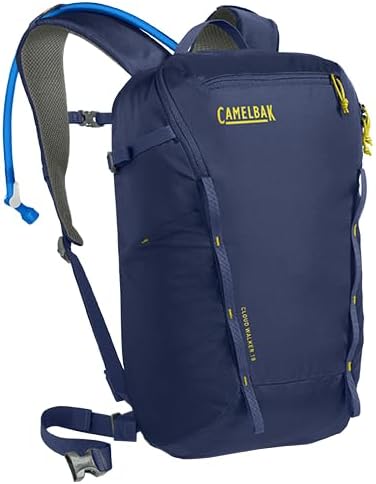
- Air Support Back Panel: Body Mapping Technology enhances ventilation in high-heat zones for all-day comfort
- Crux Reservoir: 70oz capacity delivers more water per sip with ergonomic handle for easy refills
- Removable Waist Strap: Adds stability when needed and allows for flexible fit and movement
Best for Hydration-Focused Hiking
CamelBak invented the hydration reservoir category, so it makes sense they’d build exceptional packs designed around hydration systems. The Cloud Walker 18 is purpose-built for hikers who prioritize staying hydrated and prefer sipping from a hose over stopping to pull out water bottles.
Hydration Integration:
The Cloud Walker includes CamelBak’s 2.5-liter Crux reservoir, which is genuinely excellent. The bite valve is easy to use and doesn’t leak. The wide-mouth opening makes filling and cleaning simple (a common frustration with reservoirs). The on/off valve prevents accidental spills.
The reservoir fits into a dedicated sleeve with a magnetic hose clip that attaches to the shoulder strap, keeping the hose positioned perfectly for sipping without hands. This sounds like a small thing, but it’s incredibly convenient—you drink more frequently because there’s zero friction to hydrating.
Capacity and Design:
At 18 liters, this is the smallest pack in my recommendations. It’s designed for shorter hikes (3-5 hours) or minimalist hikers who pack very efficiently. I can fit the 2.5L reservoir, snacks, a light jacket, sunscreen, first aid kit, and some basic extras, but there’s not tons of extra room.
The pack uses CamelBak’s Air Director back panel with breathable mesh that channels air across your back. The ventilation is quite good, though not quite at Osprey or Deuter levels.
Comfort and Fit:
The shoulder straps are well-padded and comfortable. The sternum strap is adjustable. However, the hip belt is minimal—more of a stability strap than a load-carrying belt. This is fine given the pack’s capacity and intended use, but be aware you’re carrying weight primarily on your shoulders.
The pack fits reasonably well across a range of body types without extensive adjustment options. It’s not as customizable as higher-end packs, but most people find it comfortable enough.
Organization Features:
Beyond the main compartment and hydration sleeve, there’s a front zippered pocket (good for keys, phone, wallet), two side mesh pockets (they’ll hold water bottles if you want backup hydration), and a stretchy front pocket for a jacket or hat.
There are compression straps to cinch down the load and attachment points for trekking poles. The organization is straightforward rather than elaborate—adequate for its intended purpose.
Real-World Use:
I use this pack primarily for shorter summer hikes where I don’t need to carry extensive gear. The integrated hydration is wonderful—I find I drink significantly more water when using a reservoir versus bottles because it’s so effortless.
The pack is lightweight (1.5 pounds including reservoir) and doesn’t feel bulky or restrictive. For fast-paced hiking or trail running with a bit more gear than a running vest can hold, it’s excellent.
Maintenance Considerations:
Hydration reservoirs require cleaning and maintenance. You need to properly dry them between uses to prevent mold, and periodically clean with reservoir cleaning tablets or diluted bleach. It’s not difficult, but it’s more maintenance than a pack with bottles.
The Crux reservoir is easier to clean than many competitors thanks to the wide opening, but it’s still extra work compared to simply rinsing water bottles.
Durability Check:
After about 18 months and 40+ miles of use, my Cloud Walker is holding up well. The fabric shows no signs of wear, zippers work smoothly, and the reservoir hasn’t developed any leaks. The magnetic hose clip still holds firmly.
The materials feel quality without being overbuilt. It’s appropriately constructed for its intended use as a lightweight day pack.
Limitations:
The 18-liter capacity limits your carrying ability—this isn’t for all-day hikes with variable weather requiring lots of layers. The minimal hip belt won’t effectively transfer weight for heavier loads. And you’re paying partially for the included reservoir—if you prefer bottles, you’re paying for a feature you won’t use.
Ideal Users:
- Hikers who prioritize hydration
- Anyone who prefers reservoir systems over bottles
- Trail runners wanting more than a vest
- Shorter hikes (3-5 hours) in warm weather
- Minimalist packers
- Anyone who historically struggles to drink enough water on hikes
Product to Search: CamelBak Cloud Walker 18 Hydration Pack
Price Range: $90-110
5. Gregory Nano 18

- Plus Size fit is comparable to 2x-6x in apparel sizing and the torso sizing remains consistent with all other Gregory pr…
- Plus Size packs are designed with extended length shoulder straps and hip belts plus additional fit revisions to accommo…
- Brand: Gregory
Best Ultralight Pack for Gram Counters
The Gregory Nano 18 represents ultralight philosophy applied to day hiking. At just 8.8 ounces (yes, under 9 ounces!), it’s one of the lightest hiking packs available while still providing genuine functionality. This isn’t a stuff sack with straps—it’s a carefully engineered minimalist pack.
The Weight Achievement:
How does Gregory get a functional 18-liter pack under 9 ounces? By using ultralight fabrics (100D nylon), minimal padding, and a frameless design. Every element is optimized for weight savings without crossing into dysfunctional territory.
For perspective, this pack weighs less than a full Nalgene bottle. The weight savings are genuine and noticeable.
Minimalist But Functional:
Despite extreme weight savings, the Nano 18 includes surprising functionality. There’s a main compartment, top pocket, two side mesh pockets, front mesh pocket, and basic compression straps. The shoulder straps have minimal padding but are shaped to distribute weight reasonably.
There’s no hip belt, no frame, no back panel padding—just straps and pockets. This sounds uncomfortable, but the reality is different: when carrying light loads (under 12 pounds), extensive support isn’t necessary. The pack disappears on your back rather than being a presence you’re constantly aware of.
Carrying Experience:
I’ve used the Nano 18 for fast summer hikes where I’m carrying minimal gear. With a light load (under 10 pounds), it’s remarkably comfortable—or more accurately, you barely notice it’s there. The pack doesn’t dig into shoulders or create pressure points when loaded appropriately.
Push it beyond its intended use (15+ pounds), and the lack of support becomes obvious. This isn’t a criticism—it’s just understanding the pack’s designed purpose.
Packability:
Here’s a killer feature: the Nano 18 stuffs into its own pocket, compressing to roughly the size of a softball. This makes it perfect as a summit pack for mountaineering, a backup pack for travel, or keeping in your car for spontaneous hikes.
Organization:
The main compartment is simple—a large opening with a drawstring closure and top flap. The top pocket holds phone, keys, wallet. Side pockets fit standard water bottles. The front mesh pocket secures a jacket.
There’s no hydration sleeve, though you could use a reservoir if you wanted (it would just sit loose in the main compartment).
Durability Reality:
The 100D fabric is thin—you need to be conscious of sharp objects and rough surfaces. After six months of careful use, my pack shows no damage, but I treat it more gently than burlier packs.
The zippers, stitching, and materials are quality despite minimal weight. Gregory didn’t achieve weight savings through poor construction—they did it through smart material choices and minimal design.
Best Use Cases:
This pack excels for:
- Fast-and-light summer hiking
- Trail running with more gear than a vest holds
- Summit packs for alpine climbing
- Travel (packs down tiny, weighs nothing)
- Minimalist hikers who pack extremely efficiently
- Backup/emergency pack to keep in your car
Not Appropriate For:
- Longer hikes requiring extensive gear
- Photography (carrying camera equipment)
- Winter hiking with lots of layers
- Beginner hikers still figuring out what they need
- Anyone who likes having “just in case” items
Who Should Buy This:
Experienced hikers who know exactly what they need and can pack light. Ultralight enthusiasts. Anyone who values weight savings above convenience features. People who want a secondary pack for specific use cases.
The Ultralight Philosophy:
The Nano 18 requires you to think carefully about what you carry. You can’t mindlessly throw gear in—you need to be intentional. For some people, this constraint is frustrating. For others, it’s liberating.
Product to Search: Gregory Nano 18 Backpack
Price Range: $65-85
How to Choose Your Perfect Day Pack
Step 1: Assess Your Typical Hike Length
2-4 hours: 15-20 liter pack 4-6 hours: 20-25 liter pack
6-8+ hours: 25-30 liter pack
Step 2: Consider Your Packing Style
Minimalist (carry only essentials): Gregory Nano 18 or Deuter Speed Lite 20
Moderate (10 Essentials plus some extras): Osprey Talon 22 or CamelBak Cloud Walker 18
Prepared (like having options and backup gear): REI Trail 25
Step 3: Determine Your Budget
Under $75: REI Trail 25 $75-100: Deuter Speed Lite or Gregory Nano $100-125: CamelBak Cloud Walker $125+:Osprey Talon 22
Step 4: Prioritize Your Top Feature
Best overall quality: Osprey Talon 22 Lightest weight: Gregory Nano 18 Best value: REI Trail 25 Best hydration system: CamelBak Cloud Walker 18 Best for fast hiking: Deuter Speed Lite 20
Essential Pack Fitting Guide
Measuring Your Torso Length
- Have someone help you measure
- Locate your C7 vertebra (base of neck, the bone that sticks out when you tilt your head forward)
- Find your iliac crest (top of your hip bones at your sides)
- Measure the distance between these points
Torso Length Guide:
- 15-17 inches: X-Small/Small
- 17-19 inches: Small/Medium
- 19-21 inches: Medium/Large
- 21+ inches: Large/X-Large
Adjusting Your Pack Properly
- Hip belt first: Loosen all straps, put on pack, position hip belt on hip bones (not waist), tighten firmly
- Shoulder straps: Snug but not tight—most weight should be on hips
- Load lifters: Pull forward at 45-degree angle to bring pack close to back
- Sternum strap: Position between chest and armpits, tighten for stability
Signs of Poor Fit
- Shoulder pain (too much weight on shoulders)
- Lower back pain (hip belt positioned wrong)
- Pack bouncing while hiking (not properly tightened)
- Red marks or chafing (pressure points from poor fit)
- Difficulty breathing (sternum strap too tight)
Pack Care and Maintenance
After Each Hike
- Empty all pockets completely
- Shake out dirt and debris
- Wipe down with damp cloth if muddy
- Air dry if sweaty (don’t store damp)
- Check for any damage or wear
Deep Cleaning (2-3 times per year)
- Empty all pockets and compartments
- Hand wash in bathtub with mild soap
- Scrub dirty areas with soft brush
- Rinse thoroughly multiple times
- Hang to air dry (never machine dry)
- Never machine wash (damages coating and structure)
Storage
- Store in cool, dry place
- Don’t compress or stuff when storing
- Keep buckles fastened (prevents deformation)
- Avoid direct sunlight (fades fabric)
- Store away from chemicals or solvents
Common Packing Mistakes
Mistake #1: Overpacking
The temptation to bring “just in case” items leads to unnecessarily heavy loads. Stick to the 10 Essentials and eliminate duplicates.
Mistake #2: Poor Weight Distribution
Heavy items should be packed close to your back and high in the pack (between shoulder blades). This keeps your center of gravity stable.
Mistake #3: Loose Items
Everything should be secured. Loose items shifting while hiking throws off your balance and creates noise.
Mistake #4: Inaccessible Essentials
Rain jacket, snacks, first aid, and water need to be easily accessible. Don’t bury them at the bottom of your pack.
Mistake #5: Ignoring the Hip Belt
Even on day packs, use the hip belt. It significantly reduces shoulder strain and improves stability.
Final Recommendations
If I could only own one day pack: Osprey Talon 22 ($130) – versatile, comfortable, lasts forever
If budget is my priority: REI Trail 25 ($70) – excellent value, surprisingly capable
If I want the lightest possible: Gregory Nano 18 ($75) – ultralight without sacrificing function
If I prioritize hydration: CamelBak Cloud Walker 18 ($100) – best integrated hydration system
If I hike fast and light: Deuter Speed Lite 20 ($90) – purpose-built for speed
The Bottom Line
Your backpack is your most frequently used piece of hiking gear. While it’s tempting to use whatever cheap pack you have lying around, investing in a proper hiking backpack transforms your trail experience by improving comfort, organization, and weight distribution.
My advice: If you’re serious about hiking, start with the Osprey Talon 22 or REI Trail 25. Both offer excellent performance at their respective price points and will serve you well for years. As you gain experience and clarify your specific needs, you can add specialized packs for particular uses.
Remember: The best pack is one that fits your body properly and matches your actual hiking style. Don’t buy based on features you won’t use or capacity you don’t need. Choose wisely, adjust carefully, and you’ll barely notice you’re carrying anything at all.
Now get out there and hit the trails. The mountains are waiting, and with the right pack on your back, you’ll be ready for whatever adventure comes your way.
Frequently Asked Questions
Q: Do I need different packs for different seasons? A: Not necessarily. A good 20-25L pack works year-round. Winter requires more clothing layers, but you can strap overflow items to the outside if needed.
Q: Can I use a school backpack for hiking? A: For very short, easy hikes, yes. But school backpacks lack proper weight distribution, ventilation, and durability for real trail use. You’ll be much more comfortable in a proper hiking pack.
Q: How much should my loaded day pack weigh? A: For comfortable all-day hiking, aim for 10-15 pounds. Going over 20 pounds on a day hike usually means you’re carrying unnecessary items.
Q: Should I get a men’s or women’s pack? A: Women’s packs have narrower shoulder straps, shorter torso lengths, and hip belts shaped for wider hips. If you’re a woman, definitely try women’s-specific packs—the fit difference is significant.
Q: When should I replace my hiking pack? A: When zippers fail, straps tear, buckles break, or the pack no longer comfortably carries weight. With proper care, a quality pack lasts 10+ years.
Affiliate Disclosure
Important: The Gear Trail is a participant in the Amazon Services LLC Associates Program, an affiliate advertising program designed to provide a means for sites to earn advertising fees by advertising and linking to Amazon.com.
This means when you click on product links in this article and make a purchase, we may earn a small commission at no additional cost to you. These commissions help us maintain this website, purchase and test gear on actual trails, and continue providing free, honest hiking guides and reviews.
Our Commitment to You: Every backpack in this guide has been personally tested on multiple hikes across various terrains and conditions. We’ve carried these packs for hundreds of cumulative miles to evaluate comfort, durability, and real-world performance. Our editorial integrity is never compromised by affiliate relationships—we recommend the same packs to you that we carry on our own adventures.
The prices and availability mentioned in this article are accurate as of the publish date but may change. We encourage you to verify current pricing and read additional customer reviews on Amazon before making your purchase.
Thank you for supporting The Gear Trail by using our affiliate links. Your trust means everything to us, and we’re committed to maintaining complete honesty and transparency in all our gear recommendations.