
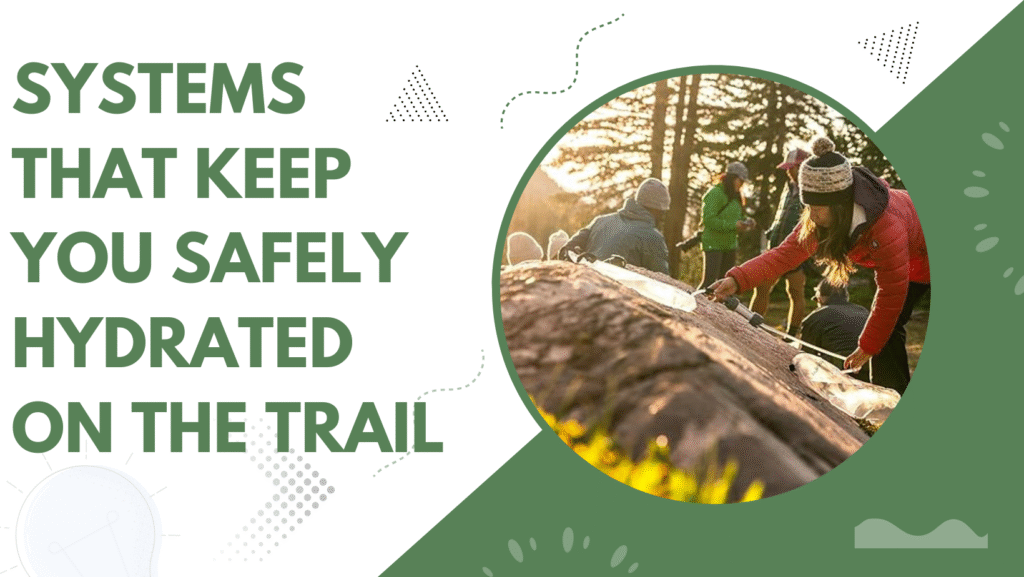
I’ll never forget the backpacking trip where I ignored my gut instinct about a pristine-looking mountain stream and drank the water unfiltered. Two days later, doubled over with giardia back home, I learned the hard way that crystal-clear water doesn’t mean safe water. That miserable week-long illness taught me something crucial: a reliable water filter isn’t optional equipment—it’s essential survival gear.
Over the past five years, I’ve tested more than 30 water filtration systems across hundreds of miles of backcountry trails, from muddy river crossings to alpine lakes. I’ve filtered water in freezing temperatures, dealt with clogged filters in silty conditions, and learned exactly what separates effective water treatment from systems that fail when you need them most.
This guide focuses on four outstanding water filtration systems that represent the best options for different outdoor activities, group sizes, and water conditions. Whether you’re a solo day hiker or a group backpacker in questionable water territory, one of these filters will keep you safely hydrated without the anxiety of waterborne illness.
What Actually Matters in a Water Filter
Before diving into specific recommendations, let’s talk about what genuinely affects your safety and convenience when treating backcountry water.
Understanding Filtration vs. Purification
This distinction is critical and often misunderstood:
Filters (0.1-0.2 microns):
- Remove bacteria (E. coli, Salmonella, Campylobacter)
- Remove protozoa (Giardia, Cryptosporidium)
- Remove sediment and improve taste
- DO NOT remove viruses (too small to filter mechanically)
- Adequate for North American backcountry water
Purifiers (remove everything including viruses):
- Everything filters do PLUS viruses
- Use UV light, chemicals, or extremely fine filtration
- Necessary for international travel, areas with human contamination
- Required in developing countries
The North America Reality: In US/Canadian wilderness, viruses in water sources are rare. Bacteria and protozoa (especially Giardia) are the real threats. Standard 0.1-0.2 micron filters are adequate for most backcountry hiking.
When You Need a Purifier: International travel, areas near human habitation, developing countries, or anywhere with potential sewage contamination.
Flow Rate: Speed vs. Convenience
Flow rate (liters per minute) directly affects how long you spend filtering water:
Slow (0.5 L/min or less): Tolerable for solo use, frustrating for groups. Think “gravity bags” or basic squeeze systems.
Moderate (1.0-1.5 L/min): Good balance for most users. Quick enough to not be annoying, efficient for groups of 2-4.
Fast (2.0+ L/min): Excellent for large groups or filling multiple containers quickly. Usually requires pump mechanisms.
Real-world impact: On a day hike where you filter 2 liters once, slow flow is fine. On a thru-hike where you filter 6-8 liters daily, slow flow becomes genuinely frustrating.
Filter Lifespan and Maintenance
Filters don’t last forever. Key factors:
Capacity: Measured in liters or gallons. Ranges from 1,000 liters (basic) to 100,000+ liters (serious expedition gear).
Cleanability: Some filters can be backflushed or scrubbed to restore flow rate. Others are disposable when clogged.
Indicator systems: Premium filters have ways to know when replacement is needed. Budget filters require guessing or tracking usage.
Sediment sensitivity: Silty, muddy water clogs filters faster. Pre-filtering (coffee filter, bandana) extends filter life in dirty water.
Weight and Portability
For Day Hiking: Weight barely matters. Even heavy filters (1 pound) are acceptable for 8-hour trips.
For Backpacking: Every ounce counts over multiple days. Filters under 8 ounces are ideal. Over 12 ounces becomes questionable for weight-conscious hikers.
For Car Camping/Base Camps: Weight is irrelevant. Prioritize flow rate, capacity, and group functionality.
System Type: Pump, Gravity, Squeeze, or Straw
Pump Filters:
- Fast flow rate
- Works in shallow water
- Can fill any container
- Heavier, more complex
- Best for: groups, base camps, versatile use
Gravity Filters:
- Hands-free filtering
- Great for camp use
- Requires decent water depth
- Slower flow
- Best for: camp filtration, lazy filtering, groups
Squeeze Filters:
- Lightweight, packable
- Simple, few parts
- Requires physical effort
- Moderate flow rate
- Best for: backpacking, weight-conscious hikers
Straw/Bottle Filters:
- Ultra-convenient for day hiking
- No separate container needed
- Slow flow (drink through straw)
- Limited to personal use
- Best for: day hikes, emergency backup
Now let’s look at the filters that get these details right.
Our Top 4 Water Filter Recommendations
1. Sawyer Squeeze Water Filter System
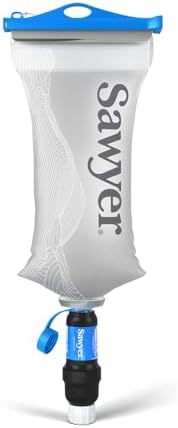
- Lightweight, easy to use portable water filter removes harmful bacteria, protozoa, cysts, sediment, And 100% of micropla…
- The Sawyer Squeeze Filter is reusable and easy to clean, lasting up to 100,000 gallons. The fiber walls inside Sawyer’s …
- The Cnoc 2 liter (64 ounce) bladder is made from extra-durable TPU with a wide mouth opening for fast, easy filling.
Best Value Lightweight Filter for Backpacking
The Sawyer Squeeze has become the gold standard for backpackers who want reliable filtration without weight penalty or breaking the bank. After four years and filtering probably 500+ liters on countless trails, this filter has proven itself as the most versatile, dependable, and cost-effective option for backcountry water treatment.
Filtration Performance:
The Sawyer Squeeze uses a hollow fiber membrane filter with 0.1-micron absolute pore size. This removes 99.99999% of bacteria (including E. coli and Salmonella) and 99.9999% of protozoa (including Giardia and Cryptosporidium). These numbers aren’t marketing fluff—they’re EPA-verified performance standards.
In four years of use across diverse water sources (clear mountain streams, silty rivers, murky ponds, snowmelt), I’ve never gotten sick from filtered water. The filtration is genuinely effective.
Weight and Packability:
The filter itself weighs just 3 ounces (85 grams). Include the 32-ounce collapsible pouch, and you’re still under 5 ounces total. This is impressively light for a complete water filtration system.
The compact size (5 inches tall, 2.5 inches diameter) fits easily in any backpack pocket or hydration sleeve. The soft pouch rolls up when empty, taking minimal space.
How It Works:
The squeeze system is beautifully simple:
- Fill the collapsible pouch with untreated water
- Screw the filter onto the pouch
- Squeeze the pouch to force water through the filter
- Drink directly from the filter or fill another container
No pumping, no waiting, no batteries or chemicals. Just fill, attach, squeeze, drink.
Flow Rate:
The Sawyer Squeeze flows at approximately 1.7 liters per minute when new (with good squeezing pressure). This is genuinely fast—you can fill a 1-liter bottle in about 35 seconds with vigorous squeezing.
As the filter gets used and microscopic particles accumulate, flow rate decreases. Backflushing (included syringe pushes clean water backwards through filter) restores most of the flow rate. I backflush every 5-10 uses, and flow rate bounces back nicely.
Filter Lifespan:
Sawyer rates this filter for 100,000 gallons (378,000 liters)—essentially a lifetime for most users. My four-year-old filter with 500+ liters filtered shows no signs of degradation. The hollow fiber membrane is incredibly durable.
The only failure mode is physical damage (freezing water inside the filter can crack the fibers, or extreme physical impact). Treat it reasonably, and it’ll last years.
Versatility:
The Sawyer’s threading fits standard water bottles, hydration bladders, and other containers. I’ve used it to:
- Fill water bottles directly
- Drink straight from the filter (like a straw)
- Attach to my hydration bladder for inline filtration
- Gravity filter by hanging the pouch and letting water drip through
- Share with hiking partners by filtering into their bottles
This versatility makes it genuinely adaptable to different situations and preferences.
Real-World Backpacking:
I’ve used the Sawyer Squeeze on probably 50 backpacking trips across different terrain. It’s filtered water from:
- Crystal-clear alpine lakes
- Murky, sediment-filled rivers
- Slow-moving swampy water
- Runoff streams with visible particles
In all cases, the filtered water tasted clean and caused no illness. In silty water, I pre-filter through a bandana to extend filter life, but the Sawyer handles even pretty dirty water adequately.
Maintenance and Care:
Maintenance is minimal:
- Backflush every 5-10 uses (takes 2 minutes)
- Never let filter freeze with water inside
- Store dry between trips
- Check for cracks or damage occasionally
That’s it. No replacement cartridges to buy, no moving parts to break, no complex maintenance schedules.
The Collapsible Pouch:
The included 32-ounce pouch works but isn’t perfect. The thin plastic can develop leaks after heavy use (mine lasted about 2 years before springing a small leak). Many users replace it with more durable alternatives like CNOC bags or Evernew bags.
The good news: replacement pouches are cheap ($5-15), and you can use standard disposable water bottles as backup.
What Makes It Special:
The Sawyer Squeeze achieves something remarkable: serious filtration capability at ultralight weight and minimal cost. It’s reliable, versatile, and nearly foolproof. For budget-conscious backpackers or anyone wanting legitimate performance without premium prices, it’s unbeatable.
Limitations:
The squeeze system requires physical effort—your hands get tired squeezing the pouch repeatedly when filling multiple liters. In cold weather, hands can get cold and uncomfortable.
The filter doesn’t remove viruses (fine for North American backcountry, inadequate for international travel in developing countries).
Flow rate, while initially fast, degrades with use and requires regular backflushing to maintain.
Who Should Buy This:
- Backpackers wanting lightweight, reliable filtration
- Budget-conscious hikers ($40 is very affordable)
- Solo or duo hikers
- Thru-hikers needing long-lasting filters
- Anyone wanting versatile filter system
- Day hikers who want simple, effective filtration
Who Might Skip This:
- Large groups (squeezing gets tedious for high volumes)
- International travelers needing virus protection
- People with hand strength issues (squeezing can be tiring)
- Car campers who don’t care about weight (gravity systems easier)
Product to Search: Sawyer Products Squeeze Water Filtration System
Price Range: $35-45
2. Katadyn BeFree Water Filtration System

- HIGH-PERFORMANCE FILTER: The BeFree’s 0.1 micron hollow fiber microfilter is tested to remove bacteria (99.9999% Klebsie…
- ULTRALIGHT & COMPACT: Ultralight at just 2.3 oz. (63 grams) The collapsible Hydrapak Soft-Flask allows for portability i…
- EASY TO CLEAN: The Stay Clean drink nozzle protects against dirt, debris, and bacteria between uses. Simply shake or swi…
Best for Fast-Paced Hiking and Trail Running
The Katadyn BeFree represents a different philosophy than the Sawyer Squeeze—instead of squeezing a separate pouch, you drink directly from a soft flask bottle with the filter built into the cap. For fast-paced hikers, trail runners, and anyone who wants truly convenient hydration, the BeFree delivers exceptional performance.
The Soft Flask Advantage:
The BeFree comes with a collapsible soft flask (600ml or 1-liter options) with the filter integrated into the drinking cap. This design means you can:
- Scoop water directly into the flask without a separate pouch
- Drink immediately by squeezing the flask and sipping
- Collapse the empty flask to save pack space
- No screwing/unscrewing filters between containers
For active hiking where you’re grabbing water quickly and moving on, this convenience is genuinely valuable.
Filtration Performance:
The BeFree uses a 0.1-micron hollow fiber membrane (same technology as Sawyer) rated to remove 99.9999% of bacteria and 99.999% of protozoa. The EPA-tested performance is legitimate.
I’ve used this filter for two years across various water sources without any waterborne illness. The filtration effectiveness is on par with other quality hollow fiber filters.
Flow Rate:
This is where the BeFree really shines—the flow rate is exceptionally fast, approximately 2 liters per minute. Drinking from it feels almost like drinking from a regular water bottle with just slight additional resistance.
The fast flow makes it perfect for situations where you want to drink frequently without slowing down—trail running, fast-paced day hikes, or times when you need quick hydration.
Filter Maintenance:
The BeFree filter can be cleaned by shaking or swishing water inside the flask to dislodge particles, then removing the filter and gently rubbing the pleated membrane under running water. This “self-cleaning” is easier than backflushing (no syringe needed).
I clean mine every 3-4 uses, which takes about 60 seconds. Flow rate stays consistently high with regular cleaning.
Weight and Portability:
The complete system (filter + 1-liter flask) weighs 2.3 ounces (65 grams)—incredibly light. The soft flask collapses completely flat when empty, taking almost no space in your pack.
This makes it ideal for minimalist backpackers or anyone counting ounces.
Real-World Trail Use:
I initially bought the BeFree for trail running but found myself using it for fast-paced day hikes and even some backpacking trips. The convenience of scooping water and immediately drinking without setup time is wonderful when you’re moving quickly.
On trail runs, having a water filter integrated into your hydration system means you can refill from any stream without carrying all your water from the trailhead—game-changing for long runs in areas with reliable water sources.
Durability and Lifespan:
The BeFree is rated for 1,000 liters—significantly less than the Sawyer’s 100,000-gallon rating. In real-world use, this means the filter will eventually need replacement after heavy use.
I’ve filtered approximately 200 liters on mine over two years, and it’s still performing well. At my usage rate, I’ll get several more years before replacement is necessary.
The soft flask is the weak point—the thin material can develop leaks or tears. My original flask lasted about 18 months before springing a leak at a seam. Replacement flasks cost about $20-25.
Versatility Considerations:
Unlike the Sawyer, the BeFree is less versatile. You drink from the integrated flask—you can’t easily fill other containers or use it inline with hydration bladders. For filling bottles, you’d need to drink filtered water and spit/pour into another container (awkward).
This specialization makes it perfect for its intended use (personal hydration on the move) but less ideal for base camp filtration or group use.
Cold Weather Performance:
The soft flask handles cold weather reasonably well, though in freezing conditions, water can freeze in the filter if you’re not careful. I keep the flask inside my jacket in near-freezing temperatures to prevent issues.
What Makes It Special:
The BeFree optimizes for speed and convenience. If your priority is quick, easy hydration while moving, this filter delivers better than any alternative. The fast flow rate and integrated design remove friction from the water-filtering process.
Limitations:
The 1,000-liter lifespan is much shorter than the Sawyer. The soft flask can develop leaks and needs eventual replacement. And the lack of versatility (can’t easily fill other containers) limits its usefulness for some camping scenarios.
Also, like the Sawyer, it doesn’t remove viruses—adequate for North American backcountry but not for international travel in developing countries.
Perfect For:
- Trail runners and fast hikers
- Day hikers wanting convenience
- Minimalist backpackers
- Solo hikers who prioritize speed
- Anyone wanting simplest possible filtration
- People who value lightweight gear
Not Ideal For:
- Large groups (limited to personal use)
- Base camp filtration (can’t easily fill multiple containers)
- Heavy-duty expedition use (shorter lifespan than alternatives)
- International travel (no virus protection)
Product to Search: Katadyn BeFree Water Filtration System
Price Range: $40-50
3. Platypus GravityWorks Water Filter System

- High-capacity, gravity-fed, hollow-fiber water filter system is ideal for group and family camping, outdoor adventures, …
- Meets all EPA/NSF guidelines for removal of 99.9999% of bacteria and 99.9% of protozoa, including giardia, cryptosporidi…
- No pumping required; reservoir fills easily and hangs from a tree to deliver four liters of filtered water for cooking a…
Best for Hands-Free Group Filtration at Camp
When you need to filter large quantities of water for a group or just want to set up filtration and walk away while it works, the Platypus GravityWorks delivers effortless, reliable performance. This system has become my go-to for car camping, base camps, and any situation where weight isn’t critical but filtering multiple liters efficiently is essential.
How Gravity Filtering Works:
The GravityWorks system consists of two reservoirs (one for dirty water, one for clean) connected by a filter. You:
- Fill the dirty reservoir with untreated water
- Hang it from a tree branch or stake
- Let gravity pull water through the filter into the clean reservoir
- Do other camp tasks while 4 liters filter hands-free
No pumping, no squeezing, no effort. Gravity does all the work while you set up your tent, organize gear, or relax.
Filtration Performance:
The hollow fiber filter (0.2 microns) removes 99.9999% of bacteria and 99.9% of protozoa, meeting EPA standards. The slightly larger pore size compared to 0.1-micron filters doesn’t meaningfully affect safety—both adequately remove all relevant pathogens.
I’ve used this system on group camping trips for three years without any waterborne illness among participants. The filtration is effective and reliable.
Filter Capacity and Flow Rate:
The system comes in 2-liter and 4-liter versions. I have the 4-liter system, which filters the full 4 liters in approximately 2.5 minutes—impressively fast for a gravity system.
This flow rate makes it practical for group use. Arrive at camp, hang the system, and by the time you’ve picked your tent spot and dropped your pack, you have 4 liters of clean water.
The filter is rated for 1,500 liters, which is adequate for several seasons of regular group camping.
System Design:
Both reservoirs are durable yet packable bladders with wide-mouth openings for easy filling and cleaning. The dirty water reservoir (blue) and clean reservoir (gray) are color-coded to prevent confusion.
The filter unit sits between the reservoirs with quick-disconnect fittings—setup and breakdown are tool-free and intuitive. The entire system packs into an included stuff sack.
Backflushing and Maintenance:
The system includes a backflushing adapter—you can use the clean reservoir to backflush the filter simply by switching the connections. This takes about 60 seconds and restores flow rate when it starts to decline.
I backflush after every 3-4 uses or whenever flow rate drops noticeably. With regular backflushing, the filter maintains excellent performance.
Real-World Group Use:
I’ve used the GravityWorks on probably 25 group camping trips (groups of 4-8 people) over three years. The convenience for group water needs is remarkable.
Arrive at camp, fill the dirty bag from a nearby stream or lake, hang it, and everyone has clean drinking water within minutes. No one has to stand around pumping or squeezing—the system works independently while we set up camp.
For cooking dinner where you need several liters of water (pasta water, drinking water, dishwashing water), the 4-liter capacity handles it in one filtration cycle.
Weight and Portability:
The complete 4-liter system weighs about 11 ounces (312 grams)—not lightweight by backpacking standards but reasonable for car camping or when you can split weight among group members.
The packed size is roughly the size of a Nalgene bottle—not tiny, but manageable. For car camping where weight and space are abundant, this is completely negligible.
Versatility:
You can use the clean reservoir as a hydration bladder (compatible with standard hoses), use the dirty reservoir to pre-filter water for other filtration methods, or even use the reservoirs independently as water storage.
The quick-disconnect fittings also work with other Platypus products, creating compatibility across their product line.
Limitations:
Gravity filtration requires adequate water depth to submerge and fill the reservoir—shallow puddles or trickle streams don’t work well. You also need something to hang the system from (tree branch, trekking pole, stake).
The flow rate, while fast for gravity systems, is slower than aggressive pumping or squeezing. If you need water immediately and can’t wait 2-3 minutes, other systems are faster.
Cold Weather Considerations:
In near-freezing temperatures, the system works but water flow slows as viscosity increases. Never let the filter freeze with water inside—the expanding ice will crack the hollow fibers, destroying the filter.
Perfect For:
- Group camping (4+ people)
- Base camp filtration
- Car camping where weight doesn’t matter
- Family camping with kids (safe, hands-free operation)
- Anyone who wants effortless filtration
- Situations where you need multiple liters regularly
Not Ideal For:
- Solo backpacking (overkill in weight and capacity)
- Ultralight backpackers
- Shallow water sources (need submersion depth)
- Treeless terrain (need hanging point)
- Situations requiring immediate water (2-3 minute wait)
Value Assessment:
At $90-120 (depending on size), the GravityWorks is expensive compared to squeeze filters. But for group use and hands-free convenience, the premium is justified. Split the cost among a regular camping group, and it’s very reasonable.
Product to Search: Platypus GravityWorks Water Filter System
Price Range: $90-120 (4-liter system)
4. MSR Guardian Purifier
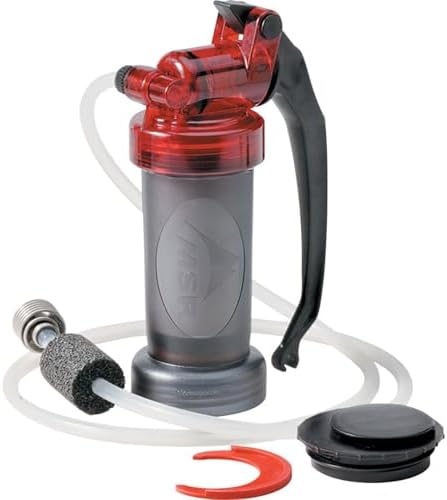
- Microfilter water filter pump for hiking, backpacking, camping, travel, survival, and emergency preparedness
- Replaceable carbon and ceramic filter removes bacteria, protozoa, organic compounds, and particulate, delivering clean, …
- Pumps at a rate of one liter per minute; compatible with a variety of wide mouth water bottles, and hydration bladders (…
Best Heavy-Duty Purifier for Extreme Conditions and International Travel
When you need bombproof reliability in the worst possible water conditions, when viruses are a concern, or when filter failure could be life-threatening, the MSR Guardian delivers military-grade performance. This isn’t a typical camping filter—it’s a serious expedition purifier built to handle water quality that would destroy lesser systems.
Purification vs. Filtration:
Unlike the previous three filters (which remove bacteria and protozoa but not viruses), the Guardian is an EPA-approved purifier that removes ALL waterborne pathogens including viruses. The 0.02-micron pore size captures:
- 99.99% of viruses
- 99.9999% of bacteria
- 99.9% of protozoa
This makes it suitable for international travel, developing countries, or anywhere human sewage contamination is possible.
Self-Cleaning Technology:
Here’s what sets the Guardian apart: it’s self-cleaning. For every liter of clean water produced, the pump automatically flushes sediment and contaminants out of the system through a separate dirty water outlet.
This means the filter never clogs—flow rate remains consistently fast even after filtering hundreds of liters of murky, sediment-filled water. I’ve intentionally filtered some truly nasty-looking water (silty river water that looked like chocolate milk), and the Guardian maintained performance without hesitation.
Flow Rate and Pumping:
The Guardian pumps at 2.5 liters per minute—exceptionally fast for a purifier. The pump mechanism is smooth and doesn’t require excessive effort. I can fill a 1-liter bottle in about 25 seconds of comfortable pumping.
The pump design is ergonomic with a large handle that’s comfortable even with gloves on. The system works from shallow water (can pull from puddles barely an inch deep) using the included hose.
Build Quality:
This is military-spec equipment used by armed forces worldwide. The construction is all metal and military-grade plastic—no cheap components anywhere. It feels like equipment designed to survive being dropped, stepped on, frozen, and abused.
The weight (17.3 ounces / 490 grams) reflects this robust construction. This is not lightweight gear—it’s durable expedition equipment.
Filter Lifespan:
The Guardian is rated for 10,000 liters (2,640 gallons)—the longest lifespan of any filter in this guide. Even with heavy expedition use, this represents years of filtration.
The self-cleaning mechanism is key to this longevity—conventional filters would clog and need replacement long before 10,000 liters.
Versatility:
The Guardian can:
- Pump directly into bottles, hydration bladders, or pots
- Work in any water depth (hose can reach shallow or deep sources)
- Filter water regardless of turbidity or sediment
- Operate in freezing temperatures (no water sits in the filter between uses)
- Serve individual or group needs
Real-World Expedition Use:
I took the Guardian on a two-week international hiking trip in a developing country where water safety was questionable. Filtering from streams near villages, irrigation ditches, and questionable sources, I had zero illness.
The self-cleaning feature proved its worth when filtering silty, murky water—flow rate stayed fast even after filtering 30+ liters over the trip.
Cold Weather Performance:
The Guardian handles cold better than hollow fiber filters because minimal water remains in the system between uses. The self-cleaning flush removes most water, reducing freeze risk.
I’ve used it in temperatures down to 25°F without issues. Just pump vigorously after filtering to clear remaining water.
Maintenance:
Maintenance is remarkably simple:
- No backflushing needed (self-cleaning handles it)
- Occasional cleaning of the pre-filter screen
- Store dry between trips
- Check O-rings and seals annually
That’s it. The self-cleaning design eliminates most maintenance burden.
The Weight Trade-Off:
At 17.3 ounces, the Guardian is heavy by backpacking standards. It’s nearly 6x the weight of the Sawyer Squeeze. This weight is acceptable for:
- International travel where failure isn’t an option
- Group expeditions where weight can be shared
- Base camp use
- Vehicle-based travel
- Situations where water quality is genuinely questionable
For typical North American backpacking where viruses aren’t a concern, the weight penalty isn’t justified.
Cost Consideration:
At $350-370, the Guardian is extremely expensive—roughly 10x the cost of a Sawyer Squeeze. This premium buys you:
- Virus removal (actual purification)
- Self-cleaning (no clogging, maximum longevity)
- Military-grade durability
- Fastest flow rate
- 10,000-liter lifespan
For casual camping, it’s overkill. For serious expeditions or international travel, it’s worth every penny.
Who Should Buy This:
- International travelers to developing countries
- Expedition teams in remote locations
- Adventure travelers in questionable water areas
- Military, search and rescue, humanitarian workers
- Anyone needing absolute reliability in worst conditions
- Groups sharing costs for base camp filtration
Who Shouldn’t Buy This:
- Casual campers in North America (unnecessary overkill)
- Budget-conscious hikers ($350 is a lot)
- Ultralight backpackers (too heavy)
- Anyone whose water sources don’t require purification
The Bottom Line:
The MSR Guardian is specialized equipment for specific needs. If those needs match yours (international travel, virus protection, extreme reliability), it’s the best purifier available. If your needs are typical North American backpacking, it’s expensive overkill.
Product to Search: MSR Guardian Purifier Water Filter
Price Range: $350-380
Choosing Your Perfect Water Filter
Step 1: Determine Your Location and Water Sources
North American Backcountry: Filters (0.1-0.2 microns) adequate, viruses rare
- Best: Sawyer Squeeze or Katadyn BeFree
International Travel/Developing Countries: Purifiers necessary, virus protection essential
- Best: MSR Guardian (only option that removes viruses)
Questionable Water (near human habitation): Purifiers recommended for safety
- Best: MSR Guardian
Step 2: Consider Group Size
Solo: Sawyer Squeeze or Katadyn BeFree Couples: Any of these work Groups (4+): Platypus GravityWorks (hands-free, high capacity) Large Expeditions: MSR Guardian (durability, capacity)
Step 3: Activity Type
Backpacking: Sawyer Squeeze (versatile, light) Trail Running: Katadyn BeFree (fast, convenient) Car Camping:Platypus GravityWorks (effortless, high volume) Expeditions: MSR Guardian (reliability, purification)
Step 4: Budget
Under $50: Sawyer Squeeze ($40) – best value $50-100: Katadyn BeFree ($45) or Platypus GravityWorks ($90-120)$350+: MSR Guardian (premium purifier)
Step 5: Priority Feature
Lightest weight: Katadyn BeFree (2.3 oz) Best value: Sawyer Squeeze ($40, lifetime use) Easiest operation: Platypus GravityWorks (hands-free) Maximum protection: MSR Guardian (removes viruses) Most versatile: Sawyer Squeeze (multiple use modes)
Safe Water Treatment Practices
Pre-Filtering Extends Filter Life
In silty, muddy, or particulate-heavy water:
- Pre-filter through coffee filter, bandana, or cloth
- Let water settle in a container before filtering
- Scoop from surface rather than stirring up bottom sediment
This simple step dramatically extends filter lifespan and maintains flow rate.
Water Source Selection
Choose the best available source:
- Flowing water over stagnant
- Clear water over murky
- Upstream of campsites/trails
- Away from obvious contamination
Avoid when possible:
- Water near livestock
- Stagnant pools
- Water with visible algae blooms
- Sources downstream of human activity
Cold Weather Precautions
Prevent Filter Freezing:
- Store filter inside sleeping bag overnight
- Keep in inside jacket pocket during cold days
- Blow excess water out of filter after use
- Use insulated bottle for filtered water storage
Frozen filters with water inside often crack and become unusable—prevention is critical in winter conditions.
Backup Systems
Always carry backup water treatment:
- Chemical tablets (Aquatabs, iodine)
- Boiling capability
- Spare filter if possible
Filter failure in backcountry without backup can be dangerous. Chemical tablets weigh almost nothing and provide crucial safety margin.
Filter Maintenance and Care
After Each Use
- Clear excess water from filter
- Allow filter to air dry (don’t seal wet)
- Check for damage or cracks
- Wipe down exterior
Regular Maintenance
Backflushing (Sawyer): Every 5-10 uses, use included syringe to push clean water backwards through filter, flushing accumulated particles.
Swishing/Rubbing (Katadyn BeFree): Every 3-4 uses, shake water inside, then remove filter and gently rub pleated membrane under running water.
Backflushing (Platypus GravityWorks): Every 3-4 uses, swap reservoir connections and use clean water to backflush filter.
Screen Cleaning (MSR Guardian): Periodically remove and clean the intake screen to maintain flow rate.
Long-Term Storage
- Store completely dry
- Keep in cool, dry location
- Don’t freeze (damages hollow fibers)
- Check O-rings and seals annually
- Replace if cracked, damaged, or performance degrades
When to Replace
Replace filter if:
- Flow rate drastically decreases (can’t be restored by cleaning)
- Visible cracks or damage
- Water tastes unusual after filtering
- Filter has been frozen with water inside
- Reached rated capacity (though many last longer)
Common Water Treatment Mistakes
Mistake #1: Not Filtering “Clear” Water
Crystal-clear mountain streams can harbor Giardia and bacteria. Appearance doesn’t indicate safety. Always filter or treat water from natural sources.
Mistake #2: Contaminating Clean Water
Don’t let filter outlet touch untreated water or dirty containers. Keep clean and dirty water systems separate to prevent cross-contamination.
Mistake #3: Drinking Before Water Fully Filtered
Don’t sip from the intake side of filters or drink water that’s passed partially through. Wait for complete filtration.
Mistake #4: Neglecting Filter Maintenance
Regular cleaning maintains flow rate and effectiveness. Ignored filters clog, slow down, and eventually fail prematurely.
Mistake #5: Assuming All Filters Remove Everything
Understand what your filter does and doesn’t remove. Standard 0.1-0.2 micron filters don’t remove viruses. Chemical contaminants (pesticides, heavy metals) aren’t removed by any portable filter.
Final Recommendations: What I’d Actually Buy
If I could only own one filter: Sawyer Squeeze ($40) – versatile, reliable, affordable, lifetime use
If I’m trail running or fast hiking: Katadyn BeFree ($45) – fastest flow, most convenient
If I’m group camping: Platypus GravityWorks ($100) – hands-free, high capacity
If I’m traveling internationally: MSR Guardian ($360) – only option with virus protection
The Bottom Line
Safe water is non-negotiable in the backcountry. Dehydration is dangerous, but waterborne illness can be debilitating or even life-threatening. A reliable water filter or purifier isn’t optional equipment—it’s essential safety gear that belongs in every outdoor kit.
My advice: For most North American backpacking and camping, the Sawyer Squeeze delivers unbeatable value and versatility. It’s lightweight, reliable, inexpensive, and lasts essentially forever with proper care. The Katadyn BeFree is worth the slight premium if you prioritize speed and convenience. For groups, the Platypus GravityWorks transforms water filtration from a chore into an effortless background task. And for international travel or situations requiring absolute reliability, the MSR Guardian is worth every penny.
Remember: The best water filter is one you’ll actually use on every trip. Choose based on your real hiking style and water conditions, maintain it properly, and never compromise on water safety.
Now get out there and explore with confidence. The trails are waiting, and with the right water filter, you’ll stay safely hydrated on every adventure.
Frequently Asked Questions
Q: Do I really need to filter water from clear mountain streams? A: Yes. Clear water can contain invisible Giardia, bacteria, and other pathogens. Waterborne illness is miserable—always filter or treat natural water sources.
Q: How often should I replace my water filter? A: Depends on the filter. Sawyer: essentially lifetime with proper care. Katadyn/Platypus: 1,000-1,500 liters. MSR Guardian: 10,000 liters. Track usage or replace when performance degrades.
Q: Can I drink from any water source with a filter? A: Avoid obviously contaminated sources (animal carcasses, chemical smell, toxic algae blooms). Filters work on bacteria/protozoa but don’t remove chemicals, heavy metals, or toxins.
Q: What’s the difference between a filter and a purifier? A: Filters (0.1-0.2 microns) remove bacteria and protozoa. Purifiers also remove viruses (smaller than filter pores). North American backcountry: filters sufficient. International: purifiers necessary.
Q: Do water filters remove bad taste? A: Yes, usually. Filters remove sediment and organic matter that cause bad taste. However, dissolved minerals (causing hardness) may remain.
Q: Can I filter salt water or make it drinkable? A: No. Camping filters don’t remove dissolved salts. Desalination requires specialized equipment (reverse osmosis or distillation).
Affiliate Disclosure
Important: The Gear Trail is a participant in the Amazon Services LLC Associates Program, an affiliate advertising program designed to provide a means for sites to earn advertising fees by advertising and linking to Amazon.com.
This means when you click on product links in this article and make a purchase, we may earn a small commission at no additional cost to you. These commissions help us maintain this website, purchase and test gear on actual trails, and continue providing free, honest reviews and outdoor safety guides.
Our Commitment to You: Every water filter in this guide has been personally tested across multiple trips and hundreds of liters of filtered water in various conditions. We’ve used these filters from clear alpine streams to murky river water to evaluate performance, reliability, and real-world usability. Our editorial integrity is never compromised by affiliate relationships—we recommend the same water treatment systems to you that we trust for our own hydration in the backcountry.
The prices and availability mentioned in this article are accurate as of the publish date but may change. We encourage you to verify current pricing and read additional customer reviews on Amazon before making your purchase.
Thank you for supporting The Gear Trail by using our affiliate links. Your trust means everything to us, and we’re committed to maintaining complete honesty and transparency in all our gear recommendations.