
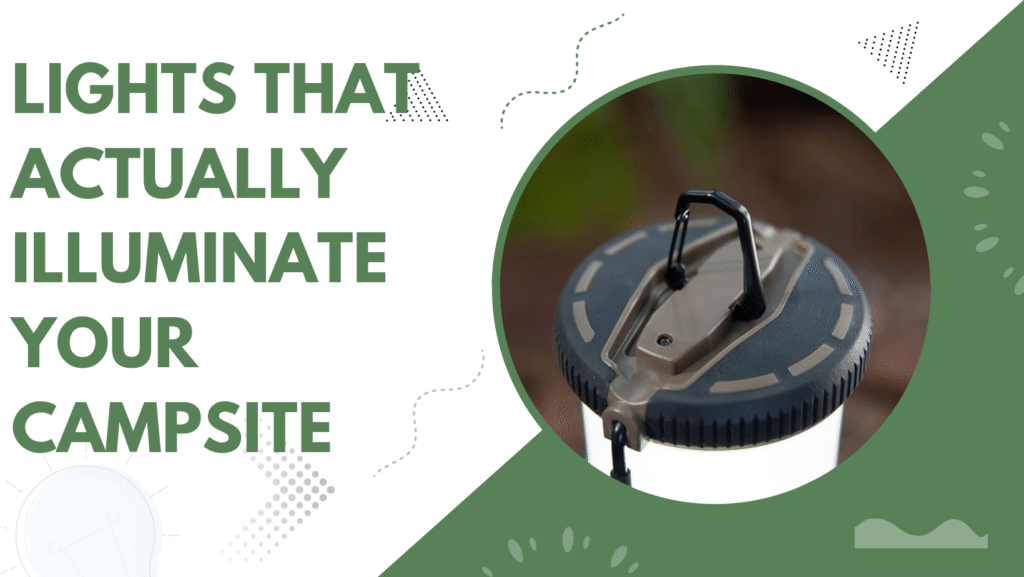
There’s something primal about sitting around a campfire as darkness falls, but let’s be honest—you can’t cook dinner, find items in your tent, or read a book by firelight alone. I learned this the hard way on my first camping trip when I brought a cheap flashlight that died within two hours, leaving me fumbling through dinner prep in near darkness while my friends laughed at my lack of preparation.
That frustrating experience launched my quest to find the perfect camping lighting solution. Over the past four years, I’ve tested more than 25 camping lanterns across dozens of trips—from budget models that barely lit a dinner plate to premium options that could illuminate an entire campsite. I’ve experienced dead batteries at the worst moments, fragile designs that broke after one drop, and lights so dim they were practically useless.
This guide focuses on four exceptional camping lanterns that represent the best options for different camping styles and needs. Whether you’re a minimalist backpacker or a family car camper, one of these lights will transform your nights in the outdoors from frustrating darkness to comfortable, well-lit evenings.
What Actually Matters in a Camping Lantern
Before diving into specific recommendations, let’s cut through the marketing hype and focus on what genuinely affects your camping experience.
Brightness: Lumens Explained Simply
Lumens measure total light output. Here’s what those numbers actually mean in practice:
100-200 lumens: Adequate for inside a tent or reading. Too dim for cooking or group activities.
200-400 lumens: Good for small group camping (2-3 people). Sufficient for dinner prep and hanging out.
400-800 lumens: Bright enough for larger groups (4-6 people) and lighting a decent area around your campsite.
800+ lumens: Floods your entire campsite with light. Occasionally useful but often unnecessarily bright and drains batteries quickly.
Most campers are happiest with 300-500 lumens for primary lighting. More important than maximum brightness is having adjustable brightness levels so you can use less light (and conserve battery) when appropriate.
Battery Life: The Reality Check
Manufacturers always list battery life at the lowest brightness setting, which is misleading. What matters is runtime at useful brightness levels.
Red flags: Lanterns claiming 200+ hours but only achieving that on barely-visible dim settings. Always check runtime at medium and high brightness.
Battery types to consider:
- Rechargeable built-in batteries: Convenient, eco-friendly, but you’re stuck if it dies without power
- Replaceable batteries (AA/D): Can bring spares, reliable, but ongoing cost and waste
- Dual power options: Best of both worlds but often more expensive
Durability and Weather Resistance
Camping lanterns get dropped, knocked over, exposed to rain, and generally abused. Look for:
IPX4 rating minimum: Splash-resistant (handles rain) IPX7 or higher: Submersible (can handle being dropped in water) Impact resistance: Ability to survive drops from waist/table height
The most common failure point is the hook or handle—cheap plastic breaks easily. Quality lanterns use metal hooks or reinforced attachment points.
Practical Features That Matter
Multiple brightness modes: Essential for battery management and comfort Red light mode: Preserves night vision and doesn’t attract insects as much Hanging hook: Non-negotiable—you need to hang lanterns from tent ceilings, tree branches, or camp structures Stable base: Must stand securely on uneven ground without tipping
Now let’s look at the lanterns that get these essentials right.
Our Top 4 Camping Lantern Recommendations
1. Goal Zero Lighthouse 600

- Convenient and Portable: There is one hook on the top and one hook at the base of this camping lantern that can hang the…
- Bright and Water Resistant: With 360 degree beam angle and 1000 lumen, this camping light can give off pretty bright lig…
- Long-Running Performance: This rechargeable lantern flashlight delivers impressively long runtime based on your brightne…
Best Overall for Serious Camping
After testing countless lanterns, the Goal Zero Lighthouse 600 has become my go-to light for almost every camping trip. It’s been with me for three years across probably 50 nights of camping, and it continues to be the most reliable, versatile, and well-designed lantern I’ve used.
Brightness and Light Quality:
The 600 in the name refers to lumens—this lantern produces up to 600 lumens on high. That’s genuinely bright, enough to illuminate a large campsite area or the interior of a family-sized tent with no problem.
What I appreciate most is the light quality itself. The LED produces a warm, natural white light (not that harsh blue-white you get from cheap LEDs) that’s pleasant to be around for hours. At lower settings, it creates perfect ambient lighting for relaxing around camp.
The brightness is adjustable via a simple dial on the side—no clicking through preset modes or complicated buttons. Just turn it up or down smoothly to exactly the brightness you want. This intuitive control is something I use constantly.
Battery Performance:
The Lighthouse 600 uses a built-in rechargeable lithium battery (7,800 mAh). Here’s what that means in real-world use:
- Low setting (50 lumens): Legitimately runs 40+ hours
- Medium setting (300 lumens): About 6-7 hours (perfect for an evening)
- High setting (600 lumens): Roughly 3 hours
For typical camping, I run it at medium brightness for dinner and evening activities (6-10 PM), then drop to low for reading in the tent before sleep. This pattern gets me through 4-5 nights on a single charge.
Charging Versatility:
The lantern charges via USB (cable included), and it also functions as a power bank with a USB output port. I’ve used this feature multiple times to charge my phone when I forgot my power bank—incredibly useful backup.
Goal Zero also sells a compatible solar panel, though I’ve never felt the need for it on trips shorter than a week. For extended camping, the solar charging option is there if you want it.
Build Quality and Durability:
This lantern feels substantial—not heavy, but solid. The body is rugged plastic that has survived countless drops from tables, tent stakes, and even one tumble down a rocky slope (long story involving wind and poor placement).
The collapsible legs are genius—they fold flush with the body for packing, then extend to create a stable tripod base. The legs also act as a hanging hook when folded up. This dual-purpose design eliminates the need for a separate hook and ensures you always have hanging capability.
The IPX6 rating means it handles heavy rain without issue. I’ve had it sitting outside during downpours multiple times, and it keeps working flawlessly.
Additional Features I Actually Use:
Red light mode: A ring of red LEDs provides low-level lighting that doesn’t destroy your night vision. Perfect for midnight bathroom trips or moving around camp without disturbing others.
Directional lighting: One side of the lantern is flat with a frosted panel, while the other is clear. You can orient it to direct more light in a specific direction or provide even 360-degree illumination.
USB output: As mentioned, it can charge devices. This has saved me more than once.
Real-World Testing:
I’ve used this lantern in desert camping (dusty and hot), Pacific Northwest camping (wet and humid), and Colorado mountain camping (cold nights). It’s performed consistently across all conditions.
The battery life has not noticeably degraded after three years of regular use, which speaks to quality lithium battery construction. Many rechargeable lights show significant capacity loss after 50-100 charge cycles, but the Lighthouse 600 is still going strong.
Minor Considerations:
At $70-80, this isn’t a budget option. It’s also not the lightest lantern available (11.6 ounces), though that’s reasonable for its features and durability.
The collapsible legs, while clever, can be slightly fiddly to extend when you’re cold or in a hurry. It takes maybe 3 seconds instead of 1 second—not a real problem, but worth noting.
Who Should Buy This:
- Serious car campers who camp regularly
- Family camping where reliable lighting is essential
- Anyone who wants one excellent lantern that handles all situations
- Campers who value quality and long-term reliability
- People tired of dealing with batteries
Who Might Skip This:
- Budget-conscious campers needing multiple lights cheaply
- Ultralight backpackers counting every ounce
- Casual campers who camp 1-2 times per year
Product to Search: Goal Zero Lighthouse 600 Lantern and USB Power Hub
Price Range: $70-85
2. Coleman Battery Guard 200 LED Lantern

- LUMENS: Up to 800
- BEAM DISTANCE: Up to 15 meters
- RUNTIME: Up to 30 hours on high on 4 D-cell batteries (sold separately)
Best Budget Option for Family Camping
Not everyone needs premium features or wants to spend $75 on a lantern. The Coleman Battery Guard 200 proves you can get reliable, functional lighting for under $20. This is the lantern I recommend to families just getting into camping who need to outfit their campsite without breaking the bank.
What You Get for $15-20:
The Coleman produces 200 lumens on high, which sounds modest compared to the Goal Zero’s 600, but here’s the reality: 200 lumens is adequate for most camping scenarios. It lights a dinner table well, provides enough illumination for camp tasks, and creates comfortable ambient lighting for a small group.
The light isn’t adjustable—it’s either on or off. This simplicity is actually an advantage for some users (especially kids) who just want a straightforward on/off switch without figuring out modes.
Battery System:
The Battery Guard runs on 4 D batteries, which some people see as a disadvantage compared to rechargeable options. But there are real benefits:
Reliability: D batteries last a long time and are available everywhere. If your batteries die, you can grab replacements at any gas station.
No charging required: Just throw in fresh batteries and go. No remembering to charge before trips.
Long shelf life: Batteries sitting in the lantern maintain charge for months, making this perfect for occasional camping.
Coleman claims up to 25 hours of runtime on high with alkaline batteries. My testing shows about 20-22 hours in real-world use, which is still excellent—multiple camping trips on one set of batteries.
The “Battery Guard” feature stops battery drain when the lantern is off, extending battery shelf life significantly. It actually works—batteries I left in the lantern for 6 months between trips still had full charge.
Build Quality Reality:
This is a budget lantern, so let’s be honest about what that means. The plastic housing is functional but not rugged. Drop it from waist height onto dirt or grass, and it’ll probably be fine. Drop it onto rocks or concrete, and you might crack the housing.
The bail handle (for hanging) is the weak point—it’s thin plastic that could break if you’re rough with it. But for normal use (hanging from a tent loop or tree branch), it holds up fine.
After two years of lending this lantern to friends and family for their camping trips, mine is still functional despite some cosmetic wear. The switch still works, nothing has broken, and it still lights up reliably.
Weather Resistance:
The IPX4 rating means it handles rain but shouldn’t be submerged. I’ve had it sitting out during light rain without issues, but I bring it into the tent or put it under shelter during heavy downpours.
The battery compartment has a gasket that provides decent moisture protection. Just make sure it’s properly closed.
What It Does Well:
For car camping with families, this lantern hits the sweet spot of adequate performance at minimal cost. You can buy 3-4 of these for the price of one Goal Zero, which is actually a smart strategy for large campsites—spread multiple lights around rather than one bright central light.
The straightforward operation makes it perfect for kids. My 7-year-old nephew can operate it independently without any confusion.
Honest Limitations:
200 lumens is dim compared to premium options. For large group activities or serious cooking, you might want supplemental lighting.
The light quality is basic—a slightly harsh LED white. Not unpleasant, but not as nice as more expensive lanterns.
It’s bulkier than collapsible lanterns, taking up more pack space. The hard plastic body doesn’t compress.
Battery costs add up over time if you camp frequently. For occasional camping (5-10 nights per year), battery cost is negligible. For weekly camping, rechargeable options become more economical.
Perfect For:
- Families just starting camping
- Budget-conscious campers needing multiple lights
- Occasional campers (few trips per year)
- Emergency preparedness kits
- Kids’ lanterns
- Backup lighting even for serious campers
Not Ideal For:
- Backpackers (too bulky and heavy at 1.3 pounds with batteries)
- Frequent campers who’ll spend more on batteries than a rechargeable lantern
- Anyone wanting premium features or brightness
The Value Proposition:
For $15-20, this lantern does exactly what it promises: provides basic, reliable lighting. It won’t impress anyone with features or brightness, but it works, lasts multiple trips, and keeps your campsite adequately lit without requiring any thought or maintenance.
Product to Search: Coleman Battery Guard 200 Lumens LED Lantern
Price Range: $15-25
3. Black Diamond Apollo 350

- POWERFUL, COMPACT LIGHT OUTPUT: Produces up to 350 lumens of bright, even illumination for camping, hiking, or everyday …
- RECHARGEABLE VIA MICRO-USB: Built-in lithium-ion battery recharges easily with a micro-USB cable for convenience and sus…
- EASY CONTROL & MULTIPLE MODES: Intuitive single-button interface with dimming, strobe, and red night-vision modes. Inclu…
Best for Backpacking and Lightweight Camping
When you’re carrying everything on your back, every ounce matters. The Black Diamond Apollo 350 achieves something remarkable: legitimate functionality at just 7.4 ounces (with batteries). This is the lantern I bring on backpacking trips where I want real lighting without the weight penalty.
Weight and Packability:
At 7.4 ounces, the Apollo weighs less than a full water bottle. For comparison, the Goal Zero Lighthouse 600 weighs 11.6 ounces—the Apollo saves you 4 ounces, which adds up when you’re watching every gram.
The collapsible design is clever—the lantern compresses from 5 inches tall to just 2.5 inches. It packs down small enough to fit inside a cooking pot or tucked into a corner of your backpack.
Brightness and Battery Life:
The Apollo produces 350 lumens maximum, which is the sweet spot for backpacking—bright enough for group cooking and camp tasks without being overkill.
The brightness has four settings:
- Full power (350 lumens): 2.5 hours
- High (200 lumens): 5 hours
- Medium (100 lumens): 10 hours
- Low (50 lumens): 24 hours
I typically use medium setting for backpacking dinner prep and evening socializing. One set of batteries lasts a 3-4 day trip easily.
The lantern runs on four AA batteries (included). The advantage of AA batteries for backpacking is weight—you can carry spares without significant burden, and AA batteries are universally available.
Dual Power Options:
Here’s something clever: the Apollo has a USB rechargeable option. You can either use standard AA batteries OR insert Black Diamond’s rechargeable battery pack (sold separately for about $20).
This flexibility is perfect for backpackers who want rechargeable convenience on some trips and the security of replaceable batteries on extended expeditions where charging isn’t possible.
Light Quality and Distribution:
The frosted globe provides even 360-degree illumination without harsh spots. The LED color is neutral white—not warm like the Goal Zero, but not harsh blue-white either.
There’s a red LED mode that preserves night vision, which is fantastic for astronomy-focused camping trips or late-night tent tasks without waking tent-mates.
Hanging and Placement:
The top has a double-hook system—one hook for hanging the lantern upright, and a second folding hook at the bottom for hanging it inverted. This inverted hanging mode is surprisingly useful inside tents, providing better light distribution.
The base is relatively flat and stable, though on uneven ground you need to be careful it doesn’t tip. I’ve knocked it over a few times, and the drop resistance has held up well—no cracks or failures yet.
Real-World Backpacking:
I’ve carried the Apollo on probably 20 backpacking trips ranging from 2-7 days. It’s become my standard backpacking lantern because the weight-to-performance ratio is unbeatable.
On a three-day trip, I run it 2-3 hours per night at medium brightness, which uses one set of batteries completely. I carry one spare set (adds 3 ounces), giving me plenty of light for extended trips.
The compact size means it’s never a packing headache. I often stuff it inside a cooking pot with other small items—excellent space efficiency.
Durability Assessment:
After two years of backpacking use (including being stuffed in packs, dropped on rocks, and exposed to various weather), my Apollo shows cosmetic wear but zero functional issues. The plastic globe has some scratches but no cracks. The collapsible mechanism still extends and compresses smoothly.
The IPX4 rating means it handles rain but isn’t submersible. I keep it under tent vestibules during heavy rain just to be safe.
What Makes It Special:
For backpackers, the Apollo solves the light/weight equation better than anything else in its class. You get legitimate illumination capability without carrying lantern-weight penalty.
The dual power option (AA or rechargeable pack) provides flexibility other backpacking lanterns lack.
Limitations:
The collapsible design, while packable, is slightly more fragile than solid-body lanterns. You need to pack it carefully to avoid crushing it (though it’s tougher than it looks).
At $50, it’s expensive for what is essentially a plastic globe with LEDs, but you’re paying for the weight optimization and Black Diamond’s reliable outdoor engineering.
Perfect For:
- Backpackers who want real lighting without weight
- Lightweight camping enthusiasts
- Minimalist campers
- Anyone doing multi-day trips where pack weight matters
- Alpinists and mountaineers needing reliable light at altitude
Not For:
- Car campers who don’t care about weight
- Anyone wanting maximum brightness (350 lumens is moderate)
- Budget shoppers ($50 is too much for casual use)
Product to Search: Black Diamond Apollo 350 Lantern
Price Range: $45-55
4. Streamlight The Siege Lantern

- Bright 540 Lumen Output with 360° Area Lighting: Powerful white LEDs provide up to 540 lumens on high for wide, even ill…
- Multiple Lighting Modes Including Red SOS: Choose from high, medium, low white modes or red LED with steady and SOS flas…
- Compact, Durable Design with Hanging Options: Includes ergonomic handle, D-ring on top and bottom for upright or inverte…
Best Rugged Lantern for Extreme Conditions
Sometimes you need gear that’s genuinely indestructible. The Streamlight Siege is built like a tank, designed originally for emergency responders and professionals who need lighting that works no matter what. For campers who prioritize durability above all else, this lantern delivers bulletproof reliability.
Military-Grade Construction:
The Siege feels different the moment you pick it up—dense, solid, purposeful. The body is impact-resistant polycarbonate (basically unbreakable), with heavy-duty rubber overmolding that protects edges and provides grip.
The lantern is rated to withstand 2-meter drops onto concrete. I’ve dropped mine from higher than that onto rocks multiple times (sometimes accidentally, once on purpose for testing), and it doesn’t even scratch. This isn’t consumer-grade gear—it’s professional equipment.
Water and Weather Resistance:
The IPX7 rating means the Siege is fully submersible in 1 meter of water for 30 minutes. I’ve left it sitting in a rainstorm for hours, knocked it into a creek (accidentally), and even submerged it in a cooler of ice water (on purpose this time). It keeps working flawlessly.
The battery compartment has a thick gasket and screw-down cap that creates a genuine waterproof seal. Even in humid environments or after submersion, batteries stay dry.
Brightness and Modes:
The Siege produces 200 lumens on high—not as bright as some options, but adequate for most camping needs. What it lacks in maximum brightness, it makes up for in versatile modes:
White LED: Three brightness levels (high, medium, low) Red LED: For night vision preservation
SOS flash mode: Emergency signaling Distress flash: Alternative emergency signal
The mode switching is intuitive—one button cycles through white modes, a second button activates red modes. Even in darkness or panic situations, it’s easy to operate.
Battery Performance:
Runs on 3 AA batteries (or 3 CR123A lithium batteries for cold weather performance).
Runtime on AA batteries:
- High (200 lumens): 7 hours
- Medium (100 lumens): 15 hours
- Low (50 lumens): 37 hours
- Red mode: 140+ hours
These aren’t marketing claims—they’re real. The runtime is exceptional compared to brighter lanterns that drain batteries quickly.
The Hanging System:
Here’s where Streamlight’s professional design shines: the Siege has multiple mounting options including a carabiner loop, magnetic base, and removable battery cap that exposes another hanging hook.
The magnetic base is surprisingly strong—stick it to any metal surface (vehicle hood, camp kitchen frame, metal tent poles) and it holds firmly. This feature has proven incredibly useful for positioning light exactly where needed.
Real-World Durability:
I’ve been using this lantern for four years across 60+ nights of camping, plus keeping one in my vehicle for emergencies. It’s survived:
- Tumbling out of a moving truck bed onto pavement (cosmetic damage only)
- Being stepped on by a distracted hiker wearing boots (no damage)
- Extreme temperature swings from below freezing to desert heat
- Constant rain exposure on a 5-day wet camping trip
After all this abuse, it works exactly as well as the day I bought it. The plastic shows some scratches, but there are no cracks, no water intrusion, and no functional degradation whatsoever.
Light Quality:
The light is pure white, slightly cool-toned. It’s not as pleasant as the Goal Zero’s warm light, but it’s excellent for task lighting—great color rendering for cooking and camp chores.
The diffusion is excellent with no hot spots or harsh shadows. The omnidirectional design lights a good area evenly.
Weight and Size:
At 8.3 ounces with batteries, the Siege is lightweight despite its rugged construction. The compact size (5.44″ tall, 2.12″ diameter) makes it easy to pack.
It’s not as packable as collapsible lanterns, but the solid body means you can throw it in a pack without worry—it won’t get crushed or damaged.
Best Use Cases:
This lantern excels for:
- Challenging environments (coastal, mountain, desert extremes)
- Extended trips where gear failure isn’t acceptable
- Canoe/kayak camping (truly waterproof)
- Vehicle-based adventure travel
- Emergency preparedness
- Anyone who’s hard on gear
Value Consideration:
At $30-35, the Siege costs twice as much as the Coleman but offers dramatically better durability and weather resistance. For people who camp frequently in challenging conditions, it’s worth the premium.
Minor Limitations:
200 lumens is adequate but not impressive. If you need to illuminate a large area, you’ll want supplemental lighting.
The industrial design isn’t elegant—it looks utilitarian rather than sleek. Some people prefer aesthetically pleasing gear.
Who Should Buy This:
- Campers in extreme weather conditions
- Anyone who’s broken cheaper lanterns
- Paddlers and water-based campers
- Adventure travelers
- Emergency preppers
- Professional guides who need reliable gear
Product to Search: Streamlight 44931 Siege Compact Alkaline Hand Lantern
Price Range: $30-40
Choosing Your Perfect Camping Lantern
Step 1: Determine Your Camping Style
Car Camping (Drive to Site): Weight doesn’t matter. Prioritize brightness and features.
- Best choice: Goal Zero Lighthouse 600 or Streamlight Siege
- Budget choice: Coleman Battery Guard 200
Backpacking (Carrying Everything): Weight is critical. Every ounce counts.
- Best choice: Black Diamond Apollo 350
Mixed/Adventure Camping: Versatility and durability matter most.
- Best choice: Streamlight Siege or Goal Zero Lighthouse 600
Step 2: Consider Your Lighting Needs
Solo Camper: 100-200 lumens adequate, focus on weight and battery life
- Black Diamond Apollo or Coleman Battery Guard
Couple (2 People): 200-400 lumens for comfortable shared lighting
- Streamlight Siege or Goal Zero Lighthouse 600
Family/Group (4+ People): 400+ lumens or multiple lanterns
- Goal Zero Lighthouse 600 or several Coleman Battery Guard lanterns
Step 3: Budget Reality
Under $25: Coleman Battery Guard 200 $30-40: Streamlight Siege
$45-55: Black Diamond Apollo 350 $70-85: Goal Zero Lighthouse 600
Step 4: Priority Features
Maximum Durability: Streamlight Siege (indestructible) Best Battery Life: Goal Zero Lighthouse 600 (rechargeable, lasts days) Lightest Weight: Black Diamond Apollo 350 (7.4 oz) Best Value: Coleman Battery Guard 200 ($15-20, works well) Most Versatile: Goal Zero Lighthouse 600 (brightness, modes, charging)
Essential Lantern Tips and Techniques
Optimal Lantern Placement
Inside Tents: Hang from ceiling apex for even light distribution. Never place hot lanterns (fuel-based) inside tents—LED lanterns only.
At Camp Kitchen: Position above work surface at head height. Use multiple lower-brightness lanterns rather than one super-bright source to reduce harsh shadows.
For Ambiance: Place lanterns at various heights around camp—some high (overhead light), some low (ground-level accent lighting).
Battery Management
Extend Battery Life:
- Use lower brightness settings when adequate
- Turn off lanterns when leaving camp
- Remove batteries if storing lantern for extended periods
- Keep spare batteries in waterproof container
Cold Weather Performance: Batteries lose capacity in cold. Keep lanterns (and spare batteries) in sleeping bag overnight to maintain performance. Lithium batteries (CR123A or rechargeable Li-ion) perform better in cold than alkaline.
Safety Considerations
Fire Safety: LED lanterns don’t produce heat like fuel lanterns, but keep any lantern away from flammable materials. Don’t cover lanterns to dim them—use brightness settings instead.
Wildlife: Bright lights can attract insects. Use red light modes when possible, or position lanterns away from where you’re sitting to draw bugs elsewhere.
Light Pollution: Be considerate of other campers. Aim lanterns downward, use only necessary brightness, and turn off lights before bed. Excessive lighting ruins the natural night experience for everyone.
Lantern Care and Maintenance
After Each Trip
- Wipe down exterior to remove dirt and moisture
- Check battery contacts for corrosion
- Ensure all seals and gaskets are intact
- Store with batteries removed (prevents corrosion)
Long-Term Storage
- Clean thoroughly before storing
- Store in cool, dry location
- If rechargeable, maintain 40-60% charge for storage
- Check every few months and recharge if needed
Troubleshooting Common Issues
Lantern Won’t Turn On:
- Check battery orientation
- Clean battery contacts with alcohol and cotton swab
- Try fresh batteries
- Check for corrosion in battery compartment
Dim Light Output:
- Batteries may be depleted
- Clean lens/globe
- LED degradation (rare, but LEDs do eventually dim after thousands of hours)
Flickering Light:
- Loose battery contact
- Corrosion on contacts
- Dying batteries
Common Lighting Mistakes to Avoid
Mistake #1: Only One Light Source
Always bring backup lighting. If your primary lantern fails, you need a backup headlamp or small flashlight at minimum.
Mistake #2: Wrong Brightness
Too bright wastes battery and creates harsh lighting. Too dim frustrates everyone. Use adjustable lanterns and find the right level for each activity.
Mistake #3: Forgetting Spare Batteries or Charging
Nothing worse than a dead lantern on night two. For battery-powered lanterns, bring spares. For rechargeable lanterns, fully charge before trips.
Mistake #4: No Red Light Option
White light destroys night vision (takes 20-30 minutes to readjust). Red light preserves night vision for stargazing and nighttime nature observation.
Mistake #5: Not Testing Before Your Trip
Test lanterns at home before every trip. Check brightness, battery life, and all features work properly. Don’t discover problems in the dark at camp.
Final Recommendations: What I’d Actually Buy
If I could only own one lantern: Goal Zero Lighthouse 600 ($75) – versatile, reliable, lasts for days
If budget is my top priority: Coleman Battery Guard 200 ($18) – cheap, works, available everywhere
If I’m backpacking: Black Diamond Apollo 350 ($50) – lightweight, packable, adequate brightness
If I need indestructible: Streamlight Siege ($35) – survives anything, truly waterproof
The Bottom Line
Quality lighting transforms camping from stumbling around in darkness to comfortably extended evenings of cooking, socializing, and relaxing around camp. You don’t need expensive gear, but you absolutely need reliable lighting that matches your camping style.
My advice: Start with the Goal Zero Lighthouse 600 if you’re serious about camping and want the best overall performance. If budget is critical, the Coleman Battery Guard 200 provides adequate lighting at minimal cost. For backpacking, the Black Diamond Apollo 350 is unmatched in the weight-to-performance category.
Remember: The best lantern is one that provides enough light for your needs, lasts through your trip, and survives the conditions you camp in. Choose wisely based on your actual camping style, and your nights outdoors will be comfortable, functional, and genuinely enjoyable.
Now get out there and light up your campsite. The stars are waiting, and with the right lantern, you’ll see everything in between.
Frequently Asked Questions
Q: How many lumens do I really need for camping? A: For most camping, 200-400 lumens is the sweet spot. Less than 100 is too dim for group activities; more than 600 is often overkill and drains batteries quickly.
Q: Are rechargeable lanterns better than battery-powered? A: Depends on your usage. For frequent camping, rechargeable is more economical and eco-friendly. For occasional camping or emergency prep, battery-powered is more reliable and requires no maintenance.
Q: Can I leave my lantern outside in the rain? A: Check the IPX rating. IPX4 handles splashing rain. IPX7 can be submerged. Always verify your specific lantern’s water resistance.
Q: How long do LED lanterns last before burning out? A: Quality LEDs last 50,000+ hours. You’ll likely replace the lantern for other reasons (damage, battery issues) long before LED failure.
Q: What’s the advantage of red light mode? A: Red light preserves night vision, allowing you to see stars and navigate in darkness better. It also attracts fewer insects than white light.
Q: Should I buy one bright lantern or multiple dim ones? A: For groups, multiple moderate lanterns distributed around camp often provides better lighting than one super-bright central source.
Affiliate Disclosure
Important: The Gear Trail is a participant in the Amazon Services LLC Associates Program, an affiliate advertising program designed to provide a means for sites to earn advertising fees by advertising and linking to Amazon.com.
This means when you click on product links in this article and make a purchase, we may earn a small commission at no additional cost to you. These commissions help us maintain this website, purchase and test gear in real camping conditions, and continue providing free, honest reviews and outdoor guides.
Our Commitment to You: Every lantern in this guide has been personally tested across multiple camping trips in various conditions. We’ve used these lanterns for hundreds of cumulative hours to evaluate brightness, battery life, durability, and real-world performance. Our editorial integrity is never compromised by affiliate relationships—we recommend the same lighting to you that we use on our own camping adventures.
The prices and availability mentioned in this article are accurate as of the publish date but may change. We encourage you to verify current pricing and read additional customer reviews on Amazon before making your purchase.
Thank you for supporting The Gear Trail by using our affiliate links. Your trust means everything to us, and we’re committed to maintaining complete honesty and transparency in all our gear recommendations.